
Saffron To Lift Your Mood?The golden spice for blue days
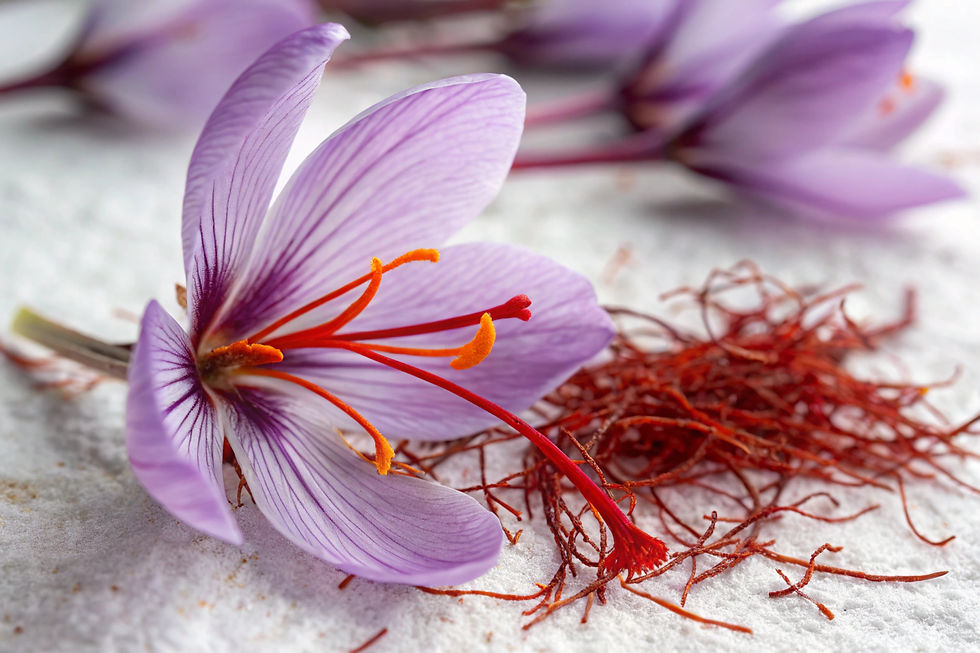
If you’ve ever cooked a paella or a fragrant rice dish, you likely know saffron as the world’s most expensive spice. Derived from the delicate crimson threads of the Crocus sativus flower, saffron has been prized for thousands of years for its distinct aroma, vibrant color, and medicinal qualities. Recently, modern science has begun catching up with this ancient herb, discovering that this golden spice might offer a natural boost for mental health and emotional well-being.
A 2026 trial by Lopresti and Smith of Monmouth University in Australia, was recently published in the journal Frontiers in Nutrition. It studied standardized saffron extract’s effect on mood, sleep and self-esteem, in women aged 50 to 70 years. This randomized, double-blind clinical study* yielded some very promising findings:
Saffron extract is comparable to low-dose SSRIs: Clinical trials comparing daily saffron extract supplementation (typically 30 mg per day) with standard low-dose prescription depression medications, such as fluoxetine (Cymbalta), found that standardized saffron performed similarly in reducing symptoms of mild-to-moderate depression. 48.8% of participants in the saffron group achieved a clinically meaningful reduction in depressive symptoms. In comparison, only 25.6% of the placebo group hit this threshold. The difference between the active and placebo groups became obvious by week 4 of the trial.
Anxiety and stress reduction: Beyond general depression, trial participants frequently reported noticeable reductions in overall anxiety, lower stress levels, and improved sleep quality after several weeks of consistent use.
Self-esteem boost: Saffron supplementation yielded a statistically significant increase in self-esteem compared to placebo—a novel outcome for any mood medication.
Reduction in sleep-related impairment: Participants reported marked improvements in daytime sleepiness and sleep-related dysfunction.
Fewer common side effects: Standard antidepressants are effective for many, but they often carry frustrating side effects, including weight gain and sexual dysfunction. Studies show saffron tends to have a favorable side-effect profile and can even help counter antidepressant-induced sexual dysfunction.
When researchers look at how saffron affects mood, they focus on several active natural compounds within the plant—most notably crocin, crocetin, and safranal. These compounds appear to work through several distinct mechanisms. Rather than targeting a single receptor, saffron acts as a botanical agent that influences multiple neurotransmitter pathways in the brain:
Neurotransmitter regulation: Saffron acts similarly to certain mild prescription antidepressants by helping to keep key "feel-good" brain chemicals—like serotonin and dopamine—active in the brain longer.
Potent antioxidant protection: Chronic stress and depression are closely tied to inflammation and oxidative damage in the brain. Saffron's vivid red pigments are powerful antioxidants that protect brain cells from oxidative stress.
Neuroplasticity support: Studies suggest saffron extracts help protect brain-derived neurotrophic factor (BDNF), a key protein responsible for supporting brain elasticity, memory, and mood stability.
There are other health benefits of saffron, well supported by previous research, including:
Age-related macular degeneration (AMD): A high concentration of crocin provides powerful antioxidant defence against oxidative stress in the retina, helping slow down the progression of AMD and improving visual acuity in early-stage age-related macular degeneration.
Premenstrual Syndrome (PMS): Saffron extract helps mitigate both emotional symptoms (irritability, mood swings) and physical symptoms (cramps, headaches) associated with PMS.
Reduced snacking, appetite regulation and weight management: Saffron can increase satiety and reduce compulsive snacking by enhancing serotonin signaling, which helps regulate appetite and emotional eating behaviors.
Better cognitive function and memory: Antioxidants in saffron protect neural cells from damage. Clinical trials suggest it may help enhance memory retention and cognitive performance in individuals with mild cognitive impairment or early-stage Alzheimer's disease.
Libido support: Saffron has shown positive effects on improving erectile function and libido in men, as well as enhancing arousal and satisfaction in women—particularly those experiencing sexual dysfunction due to antidepressant use.
Saffron has high quality evidence for depression, and unique benefits for women. It is one of the most promising natural therapies for depression. A meta-analysis of research reveals that for major depressive disorder, 3 large and 17 small trials all showed benefit. For mild depressive and anxiety symptoms, 2 large and 9 small trials showed 82% benefit. This is a better result than reported for pharmaceutical antidepressants. There are also clinical trials in postpartum and postmenopausal depression, and in young women who have mood problems on the birth control pill. Saffron does not appear to cause the well-known side effects of pharmaceutical antidepressants that women are more vulnerable to. This dopaminergic, seratonergic, and melatonin-enhancing herb improves sexual function, deepens sleep quality, and can help a little with weight loss.
Most clinical studies used 30 mg per day of standardized saffron extract. Culinary saffron threads won't deliver a predictable or big enough dose. Standardized supplements will list key active markers, like safranal and crocin. Unlike faster-acting pharmaceuticals, natural botanicals take time to accumulate in the body. Most clinical trials observe initial benefits within 2 to 4 weeks, with maximum improvement usually occurring around 6 to 8 weeks of daily use.
Saffron is safe at standard supplemental levels, however, very high doses (5 grams or more) can be toxic. Pregnant women should avoid high-dose medicinal saffron supplements, as large amounts can trigger uterine contractions, and are wise to check with a health care provider before starting new/novel supplements. If you are currently taking antidepressants, blood thinners, or blood pressure medications, speak with your healthcare provider before starting saffron to ensure there are no interactions. While saffron isn't a replacement for emergency care or professional therapy, research supports its place as an effective, natural option for many.


Comments