
Show Your Liver Some Love:Foods for better liver health
Spring is the traditional time for liver detox. If you are thinking of eating to support your liver, consuming a rainbow of colours* from fresh fruits and vegetables is always good. In particular, foods that have a bitter edge are considered to be of special benefit to the liver and gallbladder, and it is easy to incorporate these liver-friendly foods into your diet.
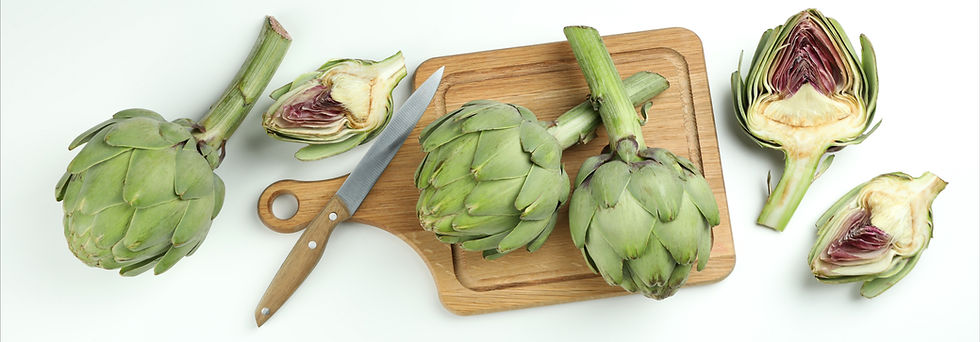
Artichoke: You may think of this as a food, which it is. And it is also a medicine! It has a slightly bitter taste, in a pleasant way, and many people consider it to be a delicacy.
As a herbal medicine, it protects the liver and enhances bile production and flow. It has a diuretic action, so it helps reduce fluid retention. Artichokes are high in fibre, so they can help sluggish digestion in several ways.
You can buy fresh artichokes, but they are difficult to peel and prepare, highly seasonal and somewhat expensive. You can find them in oil in jars, but that oil may not be the best quality oil, so it’s a good idea to rinse it off. You can also buy frozen artichoke hearts, particularly in Italian supermarkets. These are a great addition to many meals. One favorite recipe is to add them to a chicken braise with some garlic, onion, basil and handful of cherry tomatoes.
Burdock is used as a medicinal food and herb, the world over. It’s usually the root that is used, but in some cuisines the young green bitter shoots are also eaten.
It’s a starchy root that is usually boiled up in a soup. Often found in Asian cuisines, you may have seen slices of burdock floating in your miso soup!
Burdock promotes appetite, stimulates digestive juices and increases bile secretion. In herbal medicine it is considered to be a great detox herb, especially to help clear the skin.
Garlic is used in almost every culture. It is so well known that there’s even a review of its therapeutic benefits on the American National Institutes of Health link! It has anti-infective properties and was known as the “Russian Antibiotic” in WW2. Several studies show that it can protect the liver from toxic agents, including acetaminophen.
Garlic contains sulphur, as well as a form of the amino acid cysteine that is somewhat similar to NAC, both of which help you break down toxic compounds. It has been shown to reduce cholesterol and blood pressure.
Roasted garlic is more digestible than raw garlic for some people. So roast a bulb, add some to your simple mashed potatoes or check out the white bean dip with roasted garlic in our ebook.
Here’s a surprise to most of us! Garlic, the marvelous antimicrobial food, can grow botulism if stored in oil at room temperature for even a day, or in oil in the fridge for a few days! If you are storing chopped garlic in an oil base, do so in the freezer, not the fridge. Or keep your garlic in the package nature provided: the whole head, in a nice cool dry place.
Chicory is a common weed, whose beautiful pale blue flowers are seen at side of road in summer. It is part of dandelion family, and has a bitter taste.
It has a long history of herbal use. As a bitter, it is traditionally used to treat jaundice, gallstones and constipation. It is one of the best prebiotic foods, so you can find chicory root inulin in many functional foods. It provides a sense of fullness and helps balance blood sugar, and the root is often used to make a coffee substitute.
But a related plant, chicory, or chicora in Italian, is a garden vegetable eaten in the western world. It is a bitter green whose leaves can be cooked or used in salad. The popular Amaro salad (amaro means bitter in Italian) contains chicora leaves, sliced pears, walnuts and light honey dressing to balance the bitter flavour. It’s delicious!
Radishes help detoxification. They have a slightly bitter, peppery taste and improve bile flow.
Radishes contain a natural anti-fungal chemical that can eliminate Candida albicans, the most common cause of yeast problems. And horseradish has antibacterial properties that can help in mild bladder problems. Sliced radishes are so easy to toss into a salad, to add a bit of zip and zing.
Radishes contain many antioxidants, like anthocyanins, flavonoids and sulphoraphane, similar to broccoli and cabbage. A half cup of fresh radishes has half the RDA for vitamin C. Yet the calorie count for garden radishes is just 1 calorie per radish, so they pack in a lot of nutrients for that one calorie!
Turmeric is used in so many cultures as medicinal herb. In Jamaica it grows all over and is used for just about everything from fevers to arthritis.
Curcumin, an extract of turmeric, has many anti-inflammatory and antioxidant properties. It has been shown to reduce liver enzymes in the blood (which indicate an inflamed liver)**, and seems to delay liver damage that could eventually lead to major liver problems.
You can add turmeric to almost anything: it does not have much taste on its own. The absorption of turmeric not great, but improves if taken with oils and with black pepper. It is better to cook it with your food rather than to just sprinkle it over a finished dish. It is a great addition to scrambled eggs, along with a dash of fresh ground black pepper.
Golden milk is a soothing warm beverage made with coconut milk, which is high in fat. Use one cup of milk, one teaspoon turmeric powder, a half teaspoon of cinnamon, a slice of ginger and a pinch of black pepper. You can add honey or maple syrup to taste. Simmer for ten minutes to infuse the spices. Enjoy!
Green tea is slightly bitter and loaded with antioxidants, polyphenols and catechins. It gives a gentle energy boost without the jolt of coffee. In Traditional Chinese Medicine green tea is considered the fountain of youth, to keep skin looking young.
A strong 8oz mug of green tea has 28mg caffeine: half of what would be in a similar sized cup of black tea. Some people who are sensitive to caffeine find that green tea suits them better and doesn’t trigger the classic overstimulation effects of nervousness, anxiety, insomnia, and irritability. This may be because it also contains theanine, a calming plant compound used to ease anxiety.
To get the full benefits of green tea, don’t boil it. Boiling can de-nature some catechins, so it is better to leave the boiled water a minute or so before adding your green tea leaves.
Some people may experience nausea if they drink green tea on an empty stomach However, when taken with food it can reduce iron uptake, so it is best to drink green tea at least an hour after a meal.
These are just some of the many liver-supportive foods that are easy to incorporate into your daily diet. We hope we’ve inspired you to try something new!



Comments